
Area of Responsibility
Here are the areas each forward position plays in the 3-3 formation.
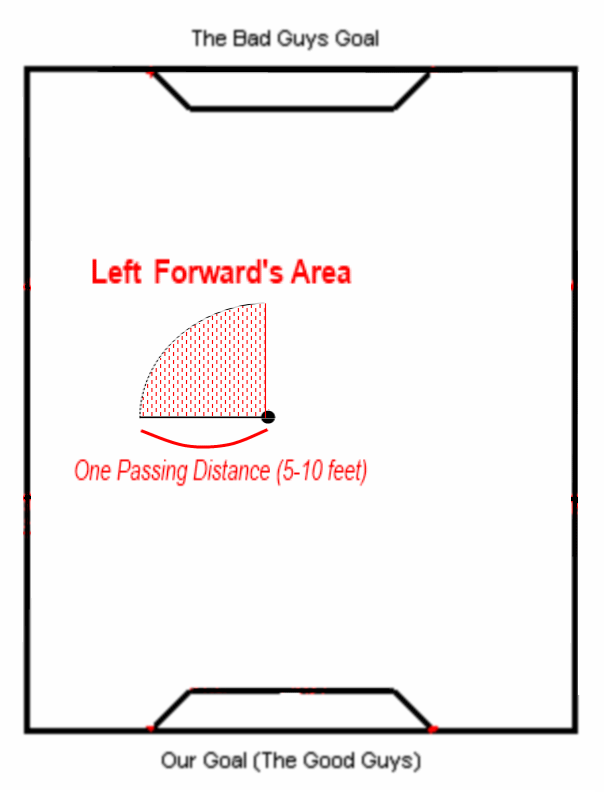
The area the left forward is responsible for is in front of the puck, either directly to the left or directly in front of the puck, within one passing distance. Please note that the left forward has no responsibilities on the right side of the puck. The person playing left forward should try to stay on the left side of the puck and should avoid ending up on the right side of the puck.
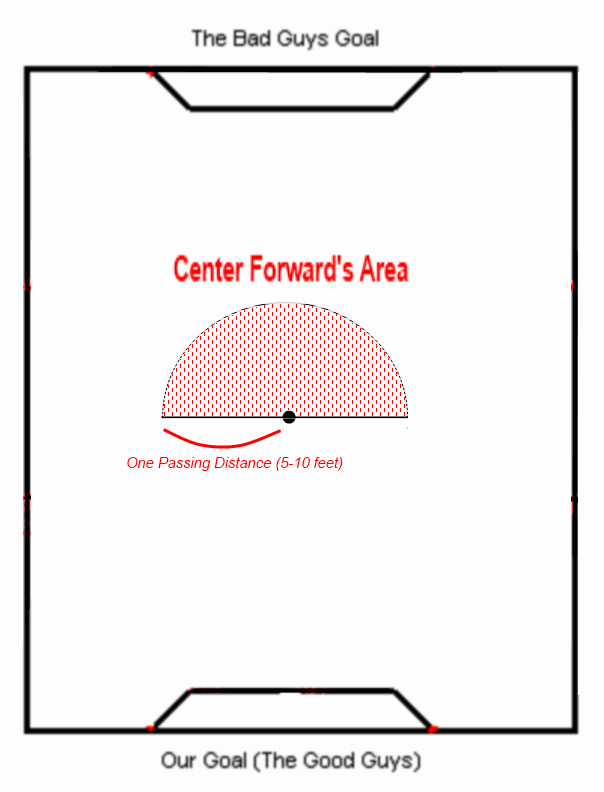
The area the center forward is responsible for is in front of the puck within one passing distance. The center forward has a lot of responsibility - and should be making a lot of drops. However, a smart center forward plays off of the left and right forwards so that they don’t end up in the same spot as their teammates.
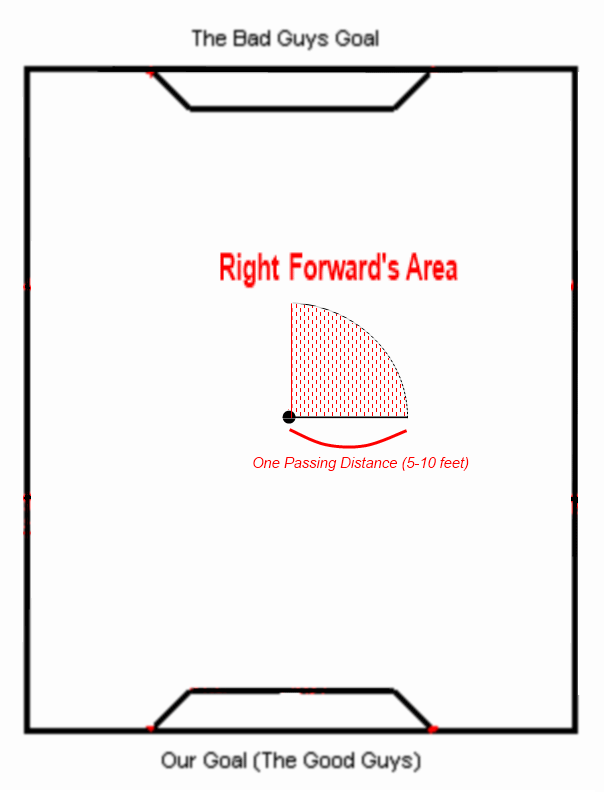
The area the right forward is responsible for is in front of the puck, either directly to the right or directly in front of the puck, within one passing distance. Please note that the right forward has no responsibilities on the left side of the puck. The person playing right forward should try to stay on the right side of the puck and should avoid ending up on the left side of the puck.
When your team has the puck, forwards should try to stay in front of the puck and within passing distance. When the other team has the puck, forwards still have defensive jobs — chase, contain, and pinch — which are covered on the position responsibility pages below.
Spacing From The Puck
Always stay within one passing distance - which is usually 5 - 10 feet at most, depending on the person who is passing the puck - of the puck. Don’t move outside of the 5-10 foot range of a player because you are counting on a big scoring opportunity. Try to keep a short distance between the player who has the puck and yourself, then move further away from the puck if a breakaway occurs.
Think about like this - if you had the puck in the same situation as the person on the bottom, you would want someone to be close enough that you could pass it without having to swim any farther forward. You want to maintain a distance that is a comfortable passing distance for the person with the puck. Don’t make someone swim to you when they’ve been on the bottom for 15 seconds and you’ve been watching the play from the surface. No one appreciates the player who spends the whole point on the surface only to drop within five feet of goal to score!
Don’t expect a back or the other forwards to come to you. Make sure you’re close enough so that at any time the person with the puck can pass it forward and it lands just in front of you. That way, you don’t have to reach back and slow down, you can continue swimming forward.
Spacing From Your Teammates
You want to keep within a passing distance of the person with the puck, but you also want to keep a passing distance AWAY from your other teammates. When your team has the puck, two teammates playing side to side are not as useful as two players at a passing distance from one another. Two players who are playing shoulder to shoulder are easy to defend. One defender can drop and be in position to cover both players. Good spacing and positioning from the puck and your teammates is key.
As the puck shifts to the side walls, this will mean that the weakside (non-side wall player away from the puck) will end up at two passing distances away. Once you are more than a passing distance away from the puck, you are not responsible to be on the bottom. You do not want to get in the way of your fellow players.
An illustration of bad positioning and good positioning is below.
An example of bad positioning
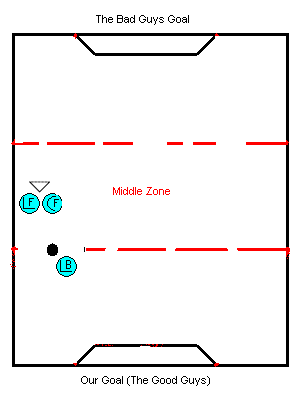
Examine the two diagrams on the left. In the 1st diagram, the left and center forwards are shoulder to shoulder waiting for a pass. Their teammate with the puck, the Left Back, could pass to one of them, but there is a defender behind them. The defender is effectively defending both players. Bad situation for the passer.
An example of good positioning
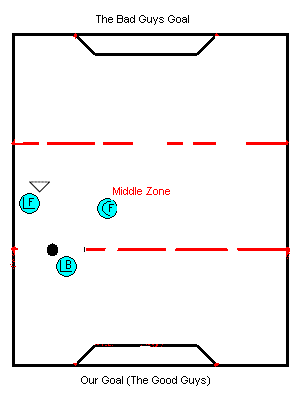
In the 2nd diagram, the forwards are at good spacing from each other and the puck. The Left Back sees the defender behind the Left Forward, but no one is covering the center forward. An easy pass, and the center forward is off to the races.
If a teammate has the puck and is encountering resistance from the other team, shorten the distance to the puck. Move farther away from the puck when there is no one between you and the person with the puck - but don’t move so far away that you are out of their passing range.
The three diagrams below try to illustrate the concept of good positioning in various scenarios.
Some Examples of Forward Positioning:
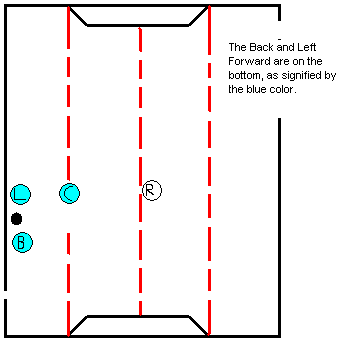
When the puck is in your area, you should be on the bottom ready to accept a pass and score a goal. When the puck is not is your area (in the case of the weakside forward where the puck is on the far wall), you should be on the surface getting ready for when the puck returns to your area. While waiting for a puck, you should be almost parallel to slightly ahead of the puck. If you feel you cannot get back to bottom when the puck comes back into your area, sub out.
Playing off your Teammates
Notice that there are at least two forwards on the bottom at all times. Forwards in the 3-3 formation play in pairs – one with the puck, the other getting in position to get the puck. When a forward passes to another, the forward who just had the puck should quickly get air, and if the puck is still in their area, get back down on the bottom. The exception to this is in front of the goal. If the puck is in front of the goal, is the highly important that all three forwards try to be on the bottom.
[Content on Alternating Drops - CF w/ RF & LF - needed here]
Position responsibilities
This page is about where forwards sit. These pages cover what to do in each role: