
Play stops; the refs set a restart. Figure out which one you are in, where you may stand, and when you can move.
Where the puck goes
Restarts sit inside the five-and-two area: at least 5 m from the end walls and 2 m from the sides. Foul outside that box? Puck moves to the nearest edge.
Equal puck
Both teams fouled, or the ref wants a neutral restart. Signal: forearms crossed in an “X.”
- Water refs stand on either side of the puck. That line is the midline.
- Each team stays on its own side.
- Heads on the surface until the buzzer.
- On the buzzer, dive. One player from each team races for the puck.
Positioning
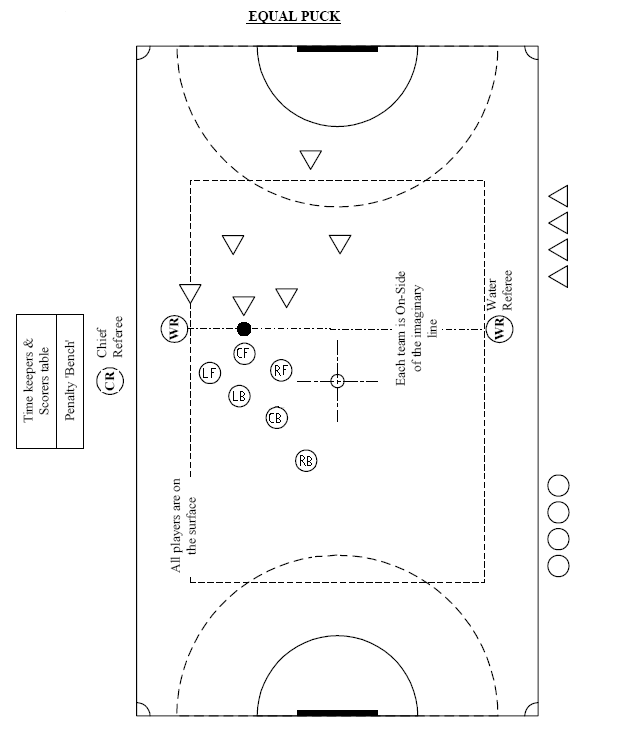
Line up much like the opening strike. Center Forward directly over the puck; left and right forwards slightly offset behind. Backs in their usual roles. Center Forward duck-dives to the puck.
Do not start the backs in a true seven. The strong-side back is about to charge forward; a full seven leaves a gap behind them. Keep center and weak-side closer to the puck so the formation settles into a seven as that back advances.
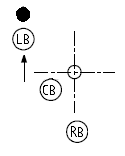
That closeness also helps if Center Forward does not win the puck: center and strong-side back are already on the play.
Advantage puck
Your team was fouled. Signal: flat hand pushing toward the offending team.
- Your team sets anywhere. One player takes the puck.
- Opponents stay 3 m back until you touch the puck.
- After the buzzer you have 5 seconds to touch it. Miss that, and the other team gets the advantage.
Same setup from the other side of the whistle is a disadvantage puck: you are the team held 3 m back.
Positioning
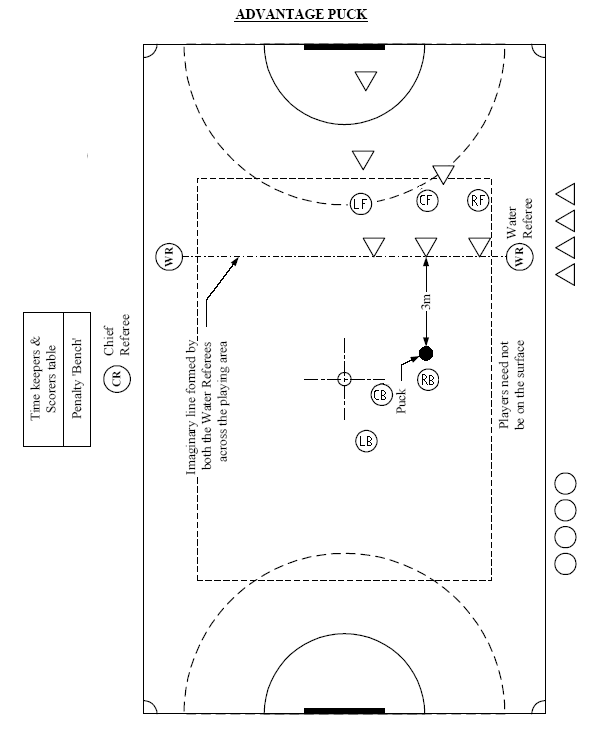
Forwards line up behind the defenders. The back who takes the puck charges forward and passes only when they meet resistance, usually over the defenders to a teammate.
Same seven-formation note as equal puck: start center and weak-side closer so the charge does not open a hole.
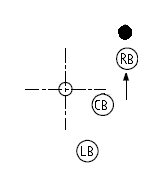
If the first pass is picked off, those nearby backs are already set to shut the play down.
Penalty shot
A foul in the goal area likely stopped a goal. Signal: fist pumping up and down. If the ref is sure it would have been a goal, they may award a penalty goal instead.
- Two attackers, one defender. Everyone else to the sub boxes.
- Puck on the penalty spot: 3 m out from the center of the goal.
- Attackers start on the surface behind the puck. After the buzzer, touch the puck within 5 seconds.
- Defender keeps one hand on the end wall until the attackers touch the puck. They may dive whenever they want.
Attackers score, or the defender fouls: goal. Puck leaves the 6 m circle around the goal, or the attackers foul: defended.
Positioning
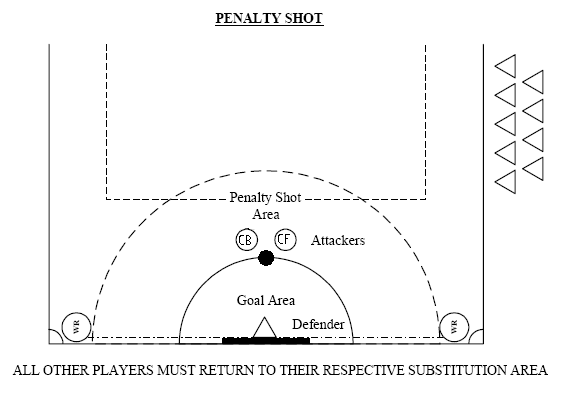
A two-on-one. Attackers usually pick their best two (often a back and a forward). Defense picks their best stopper on the goal.
Timeouts
Full-length games: usually one timeout per half, one minute each. Coach or captain signals an “O” overhead to the chief ref. Some tournaments ban them; check captains’ notes.
Refs can stop play for their own timeouts too.
Time penalties and warnings
Severe or repeated fouls: 1, 2, or 5 minutes in the box (or dismissal). Team plays short. Chief ref says when you may return.
Warnings come first for habits the ref keeps seeing. Ignore the warning and expect a time penalty.
Substitutions
Mid-game subbing: Subbing Out. Atlantis — Substitutions.